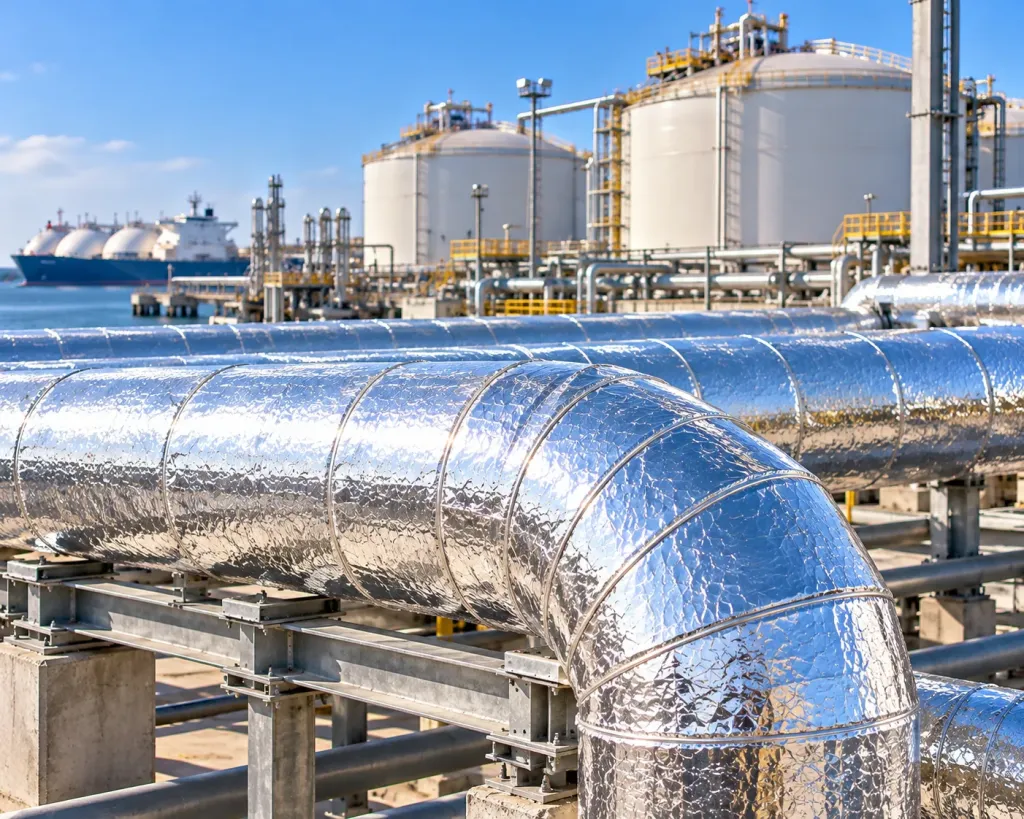
LNG is stored and moved at around -162°C. At that temperature every watt of heat that leaks into a pipe or tank turns liquid back into gas, and every gap in the insulation system is a place for ice to form. Specifying cryogenic insulation is therefore less about a single conductivity figure and more about how the whole system behaves over years of service.
What the insulation has to do
- Limit heat gain to control boil-off gas and keep the product in specification.
- Keep moisture out. Water vapour is driven toward the cold surface, where it condenses and freezes.
- Survive thermal cycling between ambient and cryogenic temperature without cracking or opening at the joints.
- Prevent condensation and ice on the outer jacket.
- Protect the steel from corrosion under insulation during warm periods and shutdowns.
Boil-off economics
Heat gain is not only an energy loss. Boil-off gas has to be re-liquefied, used as fuel or, in the worst case, flared. Lower heat gain means less gas to handle, a smaller compressor duty and more product delivered.
When comparing insulation systems, compare the heat gain of the installed system at the design thickness, including joints, supports and fittings, not only the conductivity measured on a sample in a laboratory.
Thermal shock and contraction
Steel pipe contracts noticeably when it is cooled from ambient to -162°C. Rigid insulation cannot follow that movement, so traditional systems rely on contraction joints, several layers with staggered seams and carefully detailed vapour stops. Each of those is a labour step and a possible leak path.
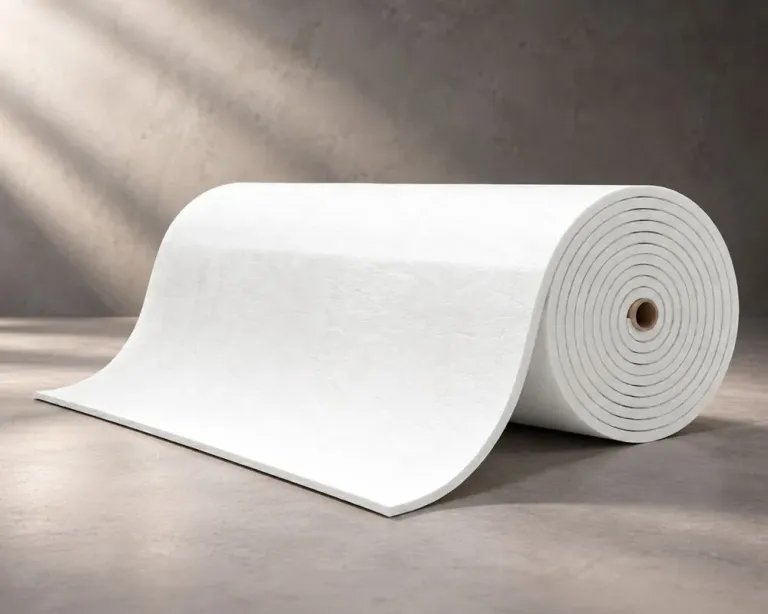
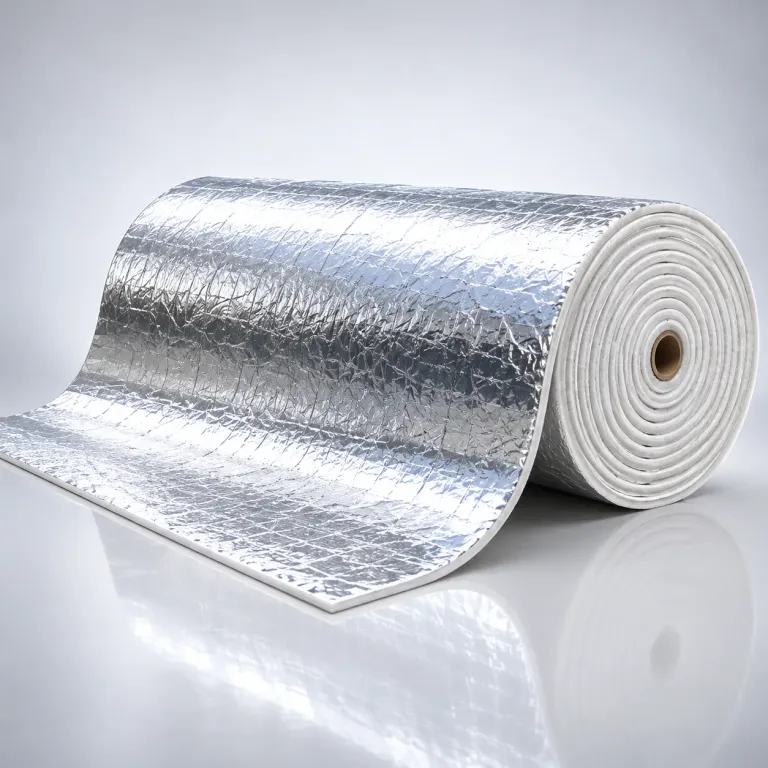
Flexible aerogel blankets move with the pipe. NanoPolar™ is rated for service down to -196°C, resists thermal cycling and comes with a factory-laminated vapour barrier, which removes the need for separate contraction joints.
Space and weight
Because aerogel has a thermal conductivity below 0.021 W/m·K, the required performance is reached with a much thinner build-up than conventional multi-layer systems. On congested pipe racks, modules and offshore topsides, thinner insulation means tighter pipe spacing, lighter supports and easier access to valves and instruments.
A specification checklist
Before issuing an insulation specification for LNG service, make sure it states:
- Design temperatures: operating, minimum and any cyclic or defrost conditions
- The maximum allowable heat gain or boil-off rate
- Ambient conditions for condensation control: temperature, humidity and wind
- The vapour barrier type and how joints and terminations are sealed
- The fire performance required for the area
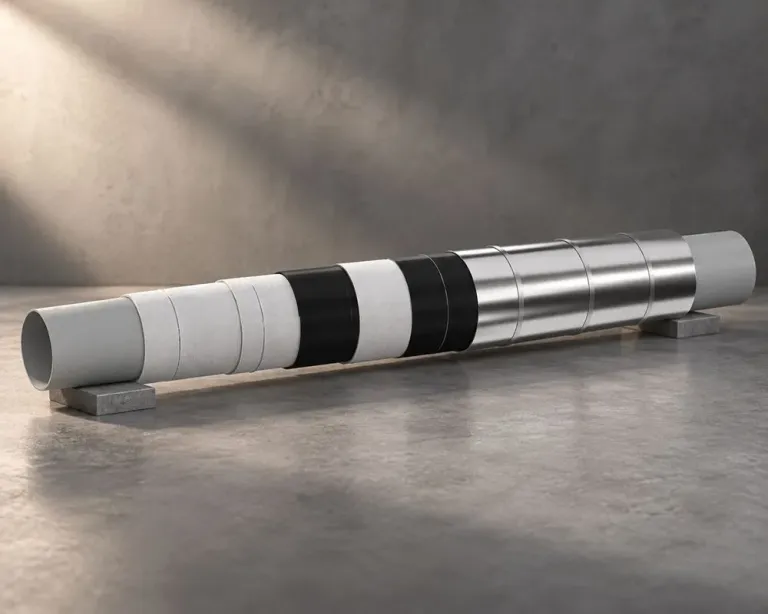
- Mechanical loads, foot traffic and the jacketing system
- The space available on the rack and around fittings
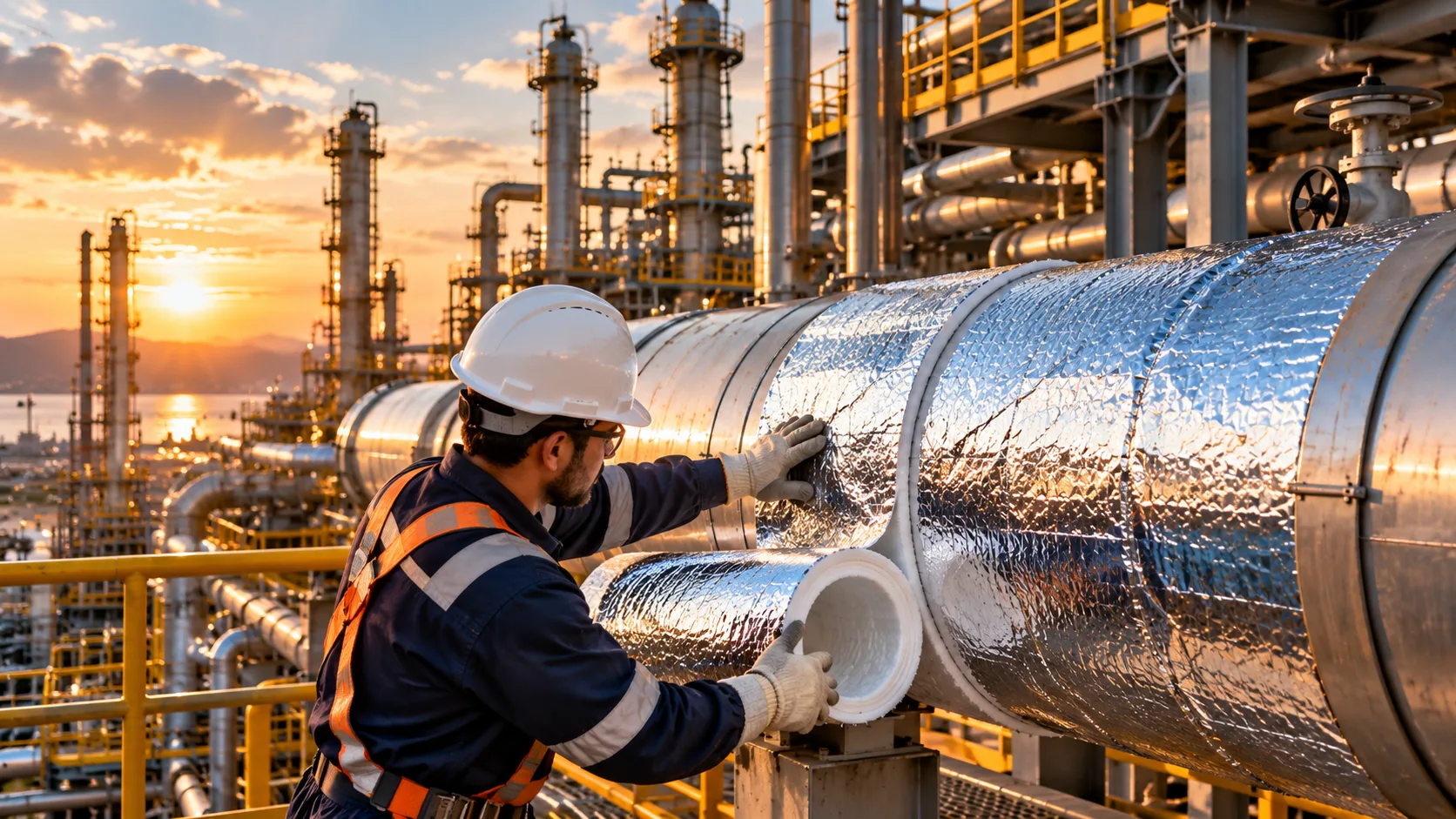
- The installation method, including pre-cut kits for valves and flanges
Our Abu Dhabi facility supplies CNC pre-cut kits for complex fittings, so crews fit and secure them on site instead of cutting. Read more about sub-ambient and cryogenic applications, or send us your line list for a thickness calculation.
Have a project in mind?
Our technical team answers specification and sizing queries within one business day.