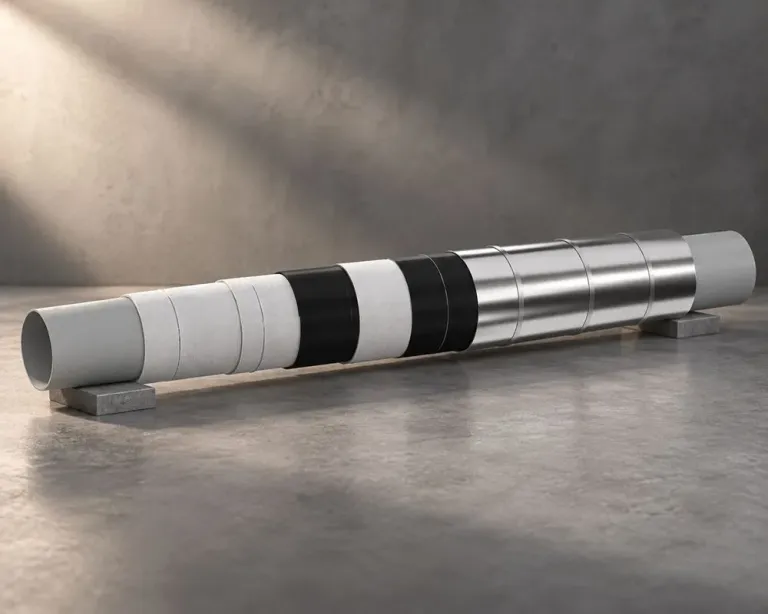
Corrosion Under Insulation (CUI) is a difficult industrial integrity challenge because it can develop beneath insulation and protective jacketing, out of sight, while the pipe or equipment remains in service. By the time the damage is discovered, repairs may require insulation removal, inspection, replacement of affected metal, and unplanned downtime.
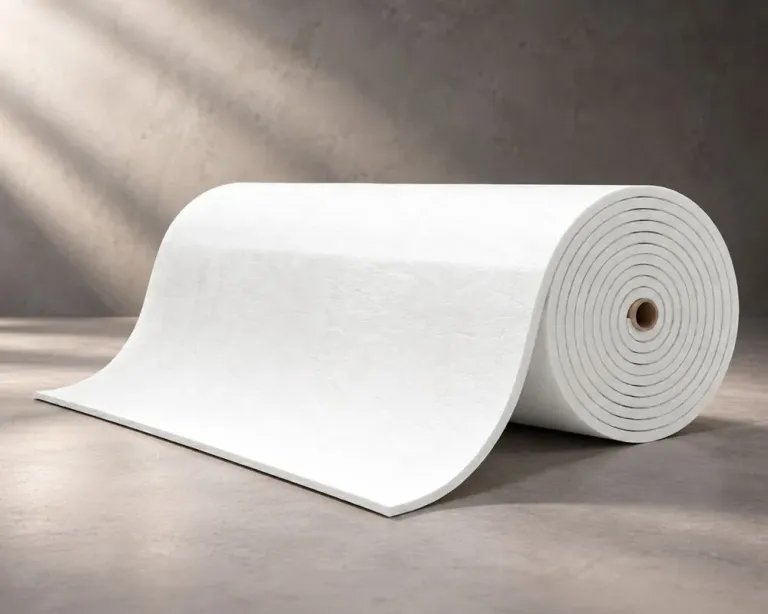
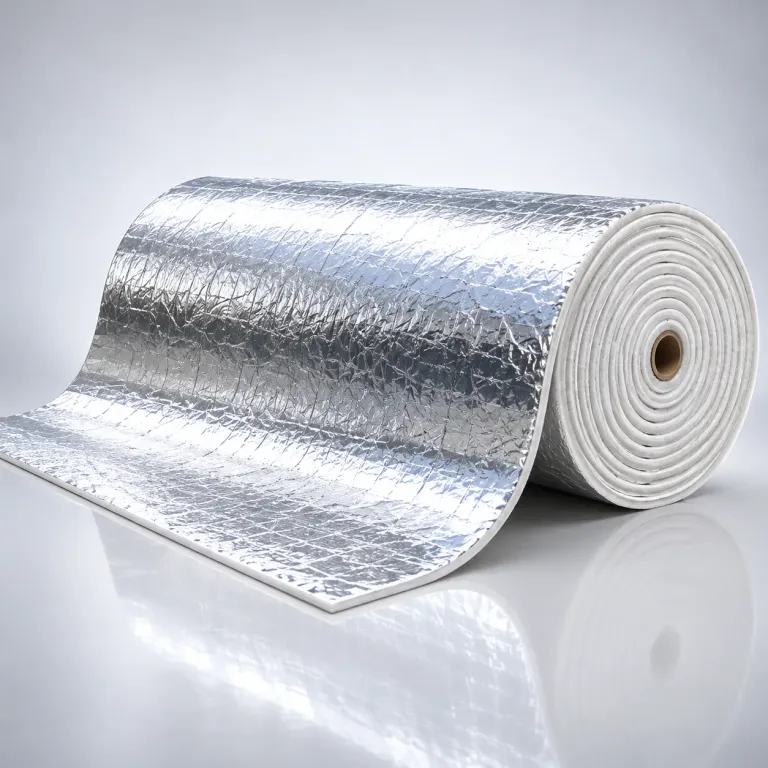
NanoGels Silica Aerogel Insulation is a strong option for corrosive operating environments because of the combination of Hydrophobicity, Vapor permeability, Physical stability, Thin installed profile, and Lifecycle perspective. In contrast, conventional materials such as mineral wool, calcium silicate, and fiberglass may absorb and retain moisture under certain conditions, increasing the potential for moisture to remain in contact with the metal substrate.
The insulation selection should not be based only on purchase price or nominal thermal conductivity. It should also consider moisture management, cladding complexity, installation time, inspection strategy, maintenance burden, asset availability, and the lifecycle cost of corrosion-related failures.
- Hydrophobicity: helps resist liquid-water uptake and pooling within the insulation.
- Vapor permeability: can allow water vapor to move out of the insulation system under suitable conditions.
- Physical stability: helps maintain the insulation profile and reduce gaps associated with sagging or packing down.
- Thin profile: can reduce the insulation thickness and cladding complexity needed to achieve a specified thermal resistance.
- Lifecycle perspective: considers installation, cladding, inspection, repair, downtime, and replacement alongside initial material cost.
Why CUI can become expensive
Moisture can enter an insulated system through damaged cladding, poorly sealed joints, penetrations, supports, terminations, weather exposure, washdowns, or leaks from nearby equipment and tracing systems. If moisture reaches the metal and remains there, corrosion conditions may develop. Temperature cycling can complicate the problem by promoting condensation, evaporation, and repeated wetting.
- The damage may remain hidden until an inspection, shutdown, leak, or failure reveals it.
- Investigation may require removal and reinstatement of insulation and jacketing.
- Repairs can involve scaffolding, access restrictions, replacement spools, welding, NDE, testing, and recommissioning.
- Unplanned maintenance can interrupt production, affect process reliability, and create additional safety and schedule pressures.
For OPERATORS in oil and gas, petrochemical, refinery, and industrial facilities, insulation performance therefore has two connected dimensions: thermal control and the management of conditions that can contribute to corrosion beneath the insulation.
Why Conventional Insulation Can Be Vulnerable
Conventional insulation types like mineral wool, calcium silicate, and fiberglass are widely used, but their behavior depends on product construction, facing, installation quality, operating temperature, exposure, and the condition of the weather barrier. Where water enters and is retained, moisture can remain close to the metal surface and contribute to CUI.
Common moisture-entry pathways
- Rainwater entering through damaged or poorly sealed cladding joints.
- High humidity and repeated condensation during temperature changes.
- Washdown water reaching seams, supports, valves, or terminations.
- Steam-tracer or process leaks wetting the insulation system.
- Mechanical damage, vibration, or poorly detailed penetrations that compromise jacketing.
The issue is not simply whether a material can become wet. It is also how quickly it takes up moisture, how much it retains, how readily the system can dry, whether the insulation settles or forms voids, and whether the overall installation keeps water away from the metal.
Aerogel’s CUI-Mitigation Mechanisms
Aerogel insulation achieves exceptional thermal protection and offers five principal advantages: (1) inherent hydrophobicity, (2) vapor permeability, (3) long-term physical and thermal stability, (4) an ultra-thin profile, and (5) total-cost-of-ownership benefits. These characteristics are presented as reasons to evaluate industrial silica aerogel blankets for demanding environments.
1 Inherent Hydrophobicity — Water Repellency

The traditional problem: Conventional insulation may absorb water from rain, humidity, washdowns, or steam-tracer leaks. If that moisture is held against carbon steel or stainless steel, the conditions for electrochemical corrosion can be created or sustained.
The aerogel advantage: NanoGels Silica aerogel insulation is engineered to be highly hydrophobic, meaning it repels liquid water. The ASTM tests describes water repellency often exceeding 99%. In practical terms, hydrophobic behavior can help limit liquid-water penetration and reduce the likelihood of water pooling against the metal substrate—even where the outer cladding has been damaged.
For plant teams, this property is relevant at vulnerable details such as pipe supports, elbows, flanges, instrument connections, terminations, and cladding seams. The benefit depends on the specific blanket construction and facing, as well as installation and maintenance quality.
2 Vapor Permeability — Breathability

The traditional problem: A system that blocks moisture from leaving may trap water vapor if moisture enters by another route. When operating temperatures change, vapor can condense and remain within the insulation system, contributing to concealed wetting and corrosion.
The aerogel advantage: The ASTM test describes NanoGels industrial aerogel blankets as hydrophobic yet vapor-permeable. The intended combination is to resist liquid-water entry while allowing water vapor to move through the insulation and escape under appropriate conditions. When the equipment heats up, residual moisture may be able to vent rather than remain trapped at the pipe wall.
3 Physical Stability and Performance Over Time

The traditional problem: Some fibrous or rigid insulation systems can degrade, sag, pack down under gravity or vibration, or deteriorate when wet. Movement and loss of shape may create gaps and voids, complicate thermal performance, and increase maintenance needs. The industrial market describes strip-and-inspect maintenance cycles of 5–8 years in damp environments.
The aerogel advantage: The ASTM cycling tests and evidences confirm that NanoGels aerogel blankets can maintain thermal and physical stability over long service periods—often described as 20+ years—without the same tendency to sag or pack down. Maintaining a consistent profile can help limit voids where water and air might collect. The source also notes that aerogel insulation contains no organic binders of the kind that can break down at elevated temperatures in some other materials.
4 Ultra-Thin Profile — Fewer Cladding Vulnerabilities

The traditional problem: To achieve a given thermal resistance, conventional insulation may require a thicker build-up than aerogel, approximately three to four times the thickness of aerogel. Thicker systems require larger cladding, more flashing, and more complicated detailing, potentially increasing surface area and the number of joints or entry points for water.
The aerogel advantage: Low thermal conductivity of NanoGels aerogel blankets can provide a specified thermal performance with a thinner insulation layer, depending on the design temperature and required resistance. A thinner system can be particularly useful on congested pipe racks, around supports, and in retrofit projects where space is limited. Fewer or simpler cladding details may reduce opportunities for moisture ingress and can ease access and installation.
The correct thickness must be calculated for the actual operating conditions, ambient design conditions, surface-temperature limits, energy-loss target, and applicable project requirements. Thickness ratios should be verified using comparable design assumptions and product data.
5 Thermal and Operational Benefits in Harsh Environments

Independent tests and evaluations positions NanoGels aerogel insulation for hot and cold industrial assets, including oil and gas facilities, petrochemical plants, refineries, and other industrial installations. Its low thermal conductivity and thin profile can support thermal control while helping preserve space around equipment and pipework.
- Hot process lines and steam systems where heat-loss control is important.
- Pipe racks with limited clearance and a high density of services.
- Retrofit work where thicker insulation would interfere with access or adjacent equipment.
- Cold or sub-ambient services where moisture management and insulation-system design are critical.
- Facilities seeking to reduce the frequency and scope of insulation removal, subject to the site’s inspection plan.
Thermal performance, fire behavior, maximum service temperature, cryogenic suitability, acoustic performance, and compatibility with cladding or coatings should be confirmed against the specific product’s technical data and applicable test reports.
Total Cost of Ownership: Look Beyond the Purchase Price

Aerogel insulation may have a higher initial material cost per square metre than conventional alternatives. NanoGels recommend that a lifecycle comparison can change the financial picture when installation time, metal cladding, support requirements, maintenance, corrosion-related repairs, unplanned downtime, and inspection intervals are considered together.
Cost categories to include
- Initial insulation material and accessories.
- Installation labor, site access, scaffolding, and work-at-height requirements.
- Cladding, flashing, bands, supports, and other system components.
- Energy losses over the operating life of the line or equipment.
- Inspection, insulation removal, reinstatement, and condition assessment.
- Corrosion repair, replacement spools, testing, and recommissioning.
- Production losses and schedule impact from unplanned shutdowns.
- Waste handling and replacement materials over the lifecycle.
Proven evidences show a payback period of 18–24 months for switching to aerogel on many hot piping and steam systems. The actual payback can be calculated based on the project’s baseline insulation, energy prices, line temperatures, operating hours, installed costs, cladding design, maintenance history, and the cost assigned to downtime.
Traditional Insulation vs. Aerogel: Summary of Benefits
| Feature | Traditional insulation | Aerogel insulation |
|---|---|---|
| Water behavior | May absorb and retain water, depending on product and system design. | Hydrophobic; designed to repel liquid water. |
| Vapor behavior | Drying behavior varies; moisture can remain trapped in some assemblies. | Vapor-permeable blanket constructions can allow vapor to escape under suitable conditions. |
| CUI exposure | Moisture retained near metal can contribute to CUI. | Can reduce important moisture-related contributors to CUI; does not eliminate risk. |
| Long-term shape | Some products may sag, settle, or degrade under particular conditions. | Designed for physical stability; verify performance for the selected product and service. |
| Thickness | May need a thicker layer to meet the same thermal target. | Low thermal conductivity can enable a thinner design, subject to calculation. |
| Cladding complexity | Thicker build-up may require more extensive cladding and detailing. | A thinner build-up may reduce cladding area and simplify installation details. |
| Initial material cost | Often lower. | Often higher. |
| Lifecycle cost | Must include inspection, repair, replacement, and downtime exposure. | May offer lifecycle savings where reduced thickness, maintenance, or downtime offsets initial cost. |
Practical Considerations for Specifiers and Plant Owners
Selecting an insulation system for CUI mitigation should be a system-level engineering decision. The following checklist can help owners, maintenance teams, EPC contractors, and FEED engineers evaluate alternatives consistently.
- Define operating and design temperatures, ambient conditions, thermal targets, and allowable surface temperatures.
- Confirm product-specific thermal conductivity data at relevant mean temperatures.
- Review hydrophobicity, water uptake, vapor transmission, dimensional stability, and mechanical properties using documented test methods.
- Check compatibility with cladding, coatings, bands, supports, sealants, and adjacent materials.
- Detail vulnerable points carefully: supports, penetrations, elbows, flanges, terminations, valves, and instrument connections.
- Confirm installation procedures, workmanship requirements, repair methods, and inspection access.
- Review fire, smoke, corrosion, and other project-specific requirements using applicable certificates and test reports.
- Set a risk-based inspection plan; insulation selection should support, not replace, asset-integrity management.
- Compare alternatives using a documented lifecycle-cost model and transparent assumptions.
Conclusion: A Lifecycle Approach to Corrosion Risk
CUI is a hidden integrity risk with the potential to generate significant maintenance cost, production disruption, and asset-reliability concerns. Traditional insulation materials can perform effectively when correctly selected, installed, and maintained, but moisture retention, degradation, and thick system build-ups may create challenges in demanding environments.
NanoGels’ aerogel insulation is a high-performance alternative based on hydrophobicity, vapor permeability, physical stability, low thermal conductivity, and a thin profile. These properties can support a strategy to reduce moisture-related CUI contributors while preserving thermal performance and saving space. The strongest case for aerogel is made by evaluating the complete system and its lifecycle—not by comparing material price alone.
Message
MICRONS OF RUST CAN LEAD TO MILLIONS IN RUIN. Select insulation with moisture management, thermal performance, installation quality, and lifecycle cost in mind.